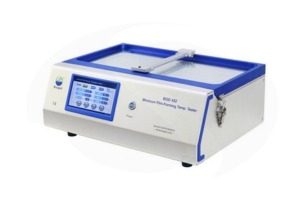
Minimum Film Forming Temp Tester for Accurate Coating Film Evaluation
The Minimum Film Forming Temperature Tester measures the lowest temperature at which polymer dispersions and latex emulsions form a continuous film under specified test conditions. This measurement supports coating formulation development, raw material evaluation, and quality control in paint, adhesive, and polymer industries.
Adarsh Technologies offers laboratory testing instruments for industrial applications, including paint and pigment testing. Selecting a suitable tester requires consideration of temperature control, testing procedures, and the properties of the material being evaluated.
Understanding the Role of a Minimum Film Forming Temp Tester
Adarsh Technologies provides laboratory testing instruments for paint, pigment, coating, and polymer applications. Its equipment supports material evaluation, formulation development, and quality control by helping laboratories assess product performance under controlled test conditions.
When comparing MFFT Tester Manufacturers in India, consider temperature control, testing consistency, instrument suitability, and technical support. Choosing the right equipment helps laboratories evaluate film formation in water-based coatings and polymer dispersions more reliably.
Why Film Formation Testing Matters in Coating Development
Film formation affects the appearance, continuity, and performance of water-based coatings. A Minimum Film Forming Temp Tester helps laboratory teams identify whether a polymer dispersion can form a continuous film under specified temperature conditions. This supports formulation comparisons, material evaluation, and quality checks before a coating is approved for use.
When choosing an MFFT Testing Instrument Supplier, laboratories should assess temperature control, testing consistency, instrument suitability, and technical support. MFFT results should also be reviewed alongside adhesion, abrasion resistance, drying behaviour, and visual inspection to gain a more complete understanding of coating performance .
Step-by-Step Laboratory Testing with a Minimum Film Forming Temp Tester
Step 1 Prepare the SampleMix the polymer dispersion or emulsion according to the applicable test procedure. Check for contamination or separation that could influence film formation.
Step 2. Set the Temperature GradientConfigure the tester according to the manufacturer's instructions. Verify that the temperature range and heating and cooling functions are suitable for the sample.
Step 3. Apply a Uniform FilmSpread the sample evenly across the temperature-gradient plate using a suitable film applicator. Consistent application helps improve test repeatability .
Step 4. Allow the Sample to DryMaintain the specified environmental conditions throughout the test. Avoid unnecessary changes in airflow, humidity, or other controlled parameters.
Step 5. Identify the Film-Forming PointInspect the dried coating to identify the transition between a cracked or discontinuous film and a continuous film. Use the corresponding temperature reading to determine the MFFT .
6. Record and Verify the ResultsDocument the sample details, test conditions, observations, and measured value. When comparing an MFFT Testing Equipment Manufacturer, laboratories should also consider instrument suitability, temperature control, and repeatability to support reliable testing .
Quality-Control Applications Across Paint, Coating, and Polymer Industries
A Minimum Film Forming Temp Tester helps laboratories evaluate the film-forming behaviour of water-based paints, protective coatings, latex systems, and polymer dispersions under controlled temperature conditions. The results support formulation development, material comparison, and quality control by identifying the temperature required for continuous film formation.
When selecting a Minimum Film Forming Temperature Tester Supplier, laboratories should assess instrument suitability, temperature control, operating procedures, and technical support. MFFT results should be interpreted alongside the final product’s application conditions and relevant performance tests to support informed quality decisions.
Conclusion on the Role of a Minimum Film Forming Temp Tester
Accurate film formation assessment helps laboratories evaluate water-based coatings, latex emulsions, and polymer dispersions under controlled temperature conditions. A Minimum Film Forming Temp Tester supports formulation development and quality control by identifying the temperature required to form a continuous film.
When choosing a Minimum Film Forming Temperature Tester Manufacturer, consider instrument performance, temperature control, testing requirements, and technical support. Adarsh Technologies offers laboratory testing instruments for industrial applications, helping laboratories select equipment suited to their material evaluation and quality-control needs.